Amplified Classics
Timeless Wisdom, Amplified
Every masterpiece transformed into a practical guide for modern life. Deep analysis, fresh perspectives, actionable wisdom.
Featured Classics
The Art of War
by Sun Tzu
The most influential strategy text ever written, used by military leaders, business executives, and athletes worldwide. AI-enhanced commentary reveals how these ancient principles of warfare apply to modern competition, negotiation, and personal development.
"Know yourself, know your enemy—victory is never in doubt"
Meditations
by Marcus Aurelius
The personal journal of Rome's philosopher-emperor, offering practical wisdom on resilience, leadership, and inner peace. Enhanced with AI commentary connecting Stoic philosophy to modern psychology, mindfulness, and executive decision-making.
"The obstacle is the way"
The Prince
by Niccolò Machiavelli
The controversial masterpiece on power, politics, and leadership that shocked Renaissance Europe. AI commentary explores its enduring relevance to modern business strategy, political science, and the ethics of pragmatic decision-making.
"It is better to be feared than loved, if you cannot be both"
Intelligence Amplifier Books
A series exploring human-AI collaboration, from philosophical foundations to practical applications.
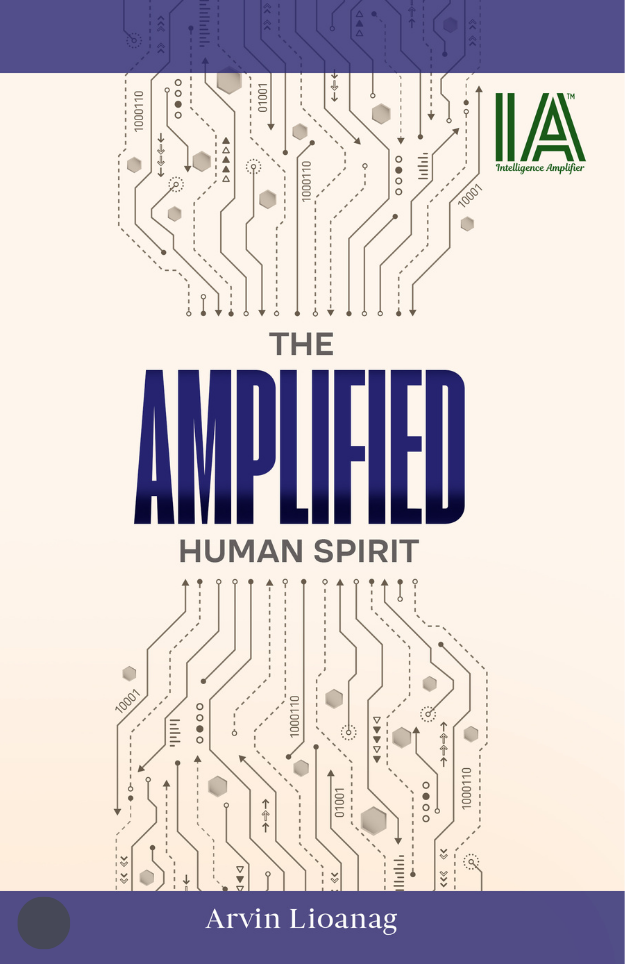
The Amplified Human Spirit
Rediscovering What Makes Us Irreplaceable
In an age where machines can write poetry, compose music, and engage in philosophical debate, what remains uniquely, irreducibly human? This book doesn't just answer that question—it transforms it. Through deep explorations of creativity, consciousness, love, and meaning, discover why AI doesn't diminish human value but illuminates it with unprecedented clarity. When artificial minds mirror our thoughts back to us, we finally see what was always there: the ineffable spark that no algorithm can replicate.
"AI doesn't replace what makes us human—it reveals it."
What You'll Discover
- 1How AI reveals rather than replaces what makes us human
- 2The surprising ways machine misunderstandings illuminate self-awareness
- 3Frameworks for creative partnership between human intuition and AI processing
- 4Why emotional intelligence becomes more valuable as AI advances
Click to flip →
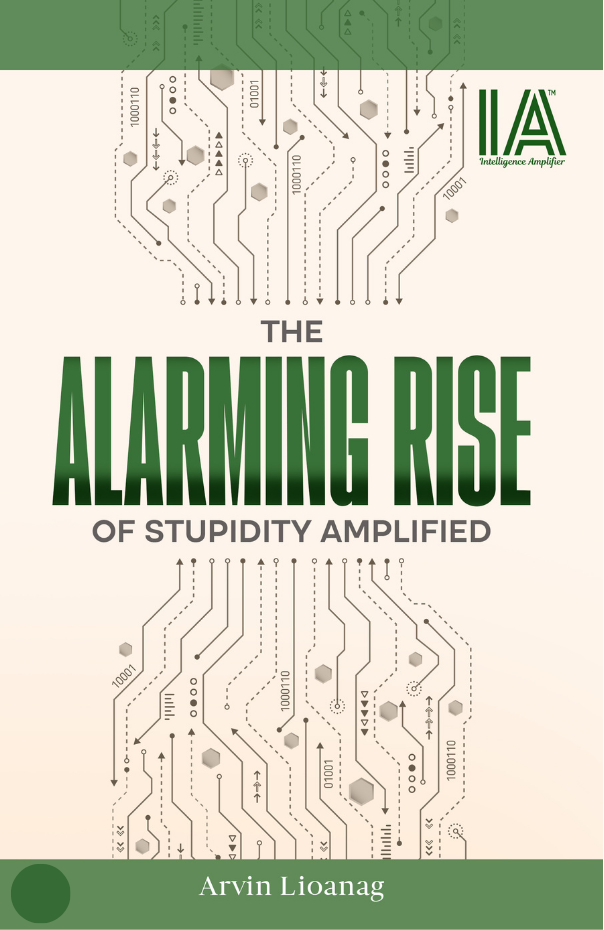
The Alarming Rise of Stupidity Amplified
A Wake-Up Call for the AI Age
The same technology that can amplify human genius can also amplify human folly at unprecedented scale. As AI-generated misinformation floods our information ecosystem and algorithmic echo chambers deepen our divisions, we face an urgent question: Will we use these powerful tools wisely, or let them weaponize our worst impulses? This unflinching examination reveals why the greatest threat isn't artificial intelligence—it's amplified ignorance.
"The problem isn't the technology itself. THE PROBLEM IS US."
What You'll Discover
- 1Why AI magnifies both intelligence and ignorance equally
- 2The psychological traps that make us vulnerable to misinformation
- 3How to develop critical thinking immunity in the age of synthetic content
- 4The difference between being informed and being wise
.png)
Click to flip →
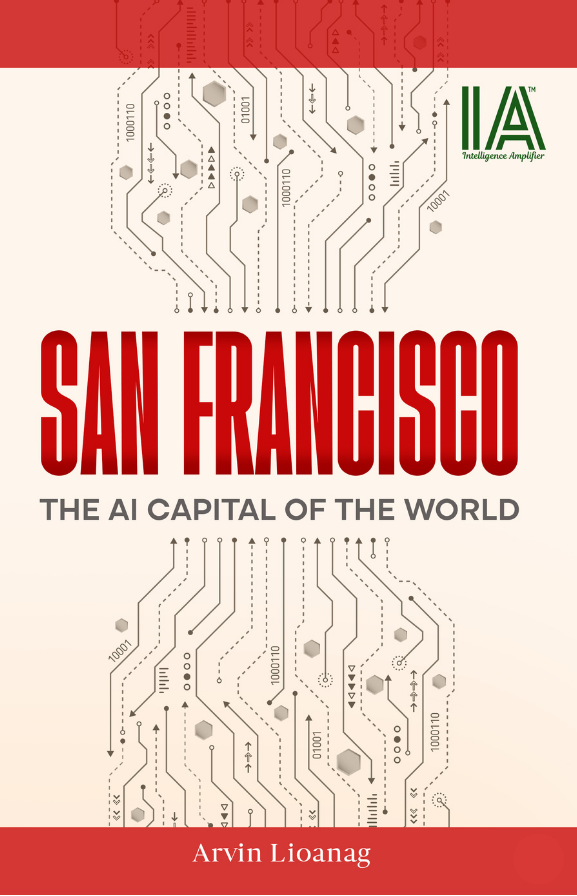
San Francisco: The AI Capital of the World
Where the Future Is Being Written
From the fog-shrouded hills where Engelbart first demonstrated the mouse to the gleaming offices where Claude, GPT, and Gemini were born, San Francisco has become ground zero for humanity's most consequential technological leap. This isn't just a story of startups and venture capital—it's the untold human drama of dreamers, skeptics, ethicists, and engineers wrestling with questions that will define our species. Walk the streets where the future is being decided.
"One city. One moment. Everything changes."
What You'll Discover
- 1The untold stories of the people building AI's future
- 2Why geography still matters in a digital age
- 3The ethical debates happening inside AI labs right now
- 4How one city became the epicenter of humanity's greatest technological leap
Click to flip →
AI Journal
50+ essays exploring the frontier of artificial intelligence and human potential.
Case Studies of Meaningful Co-Creation
Exploring real-world examples of how humans and AI collaborate to create something greater than either could alone.
Where True Originality Comes From
Understanding the source of genuine creativity in an age of AI-generated content.
The Wisdom of "I Don't Know"
Why admitting ignorance is more valuable than ever in the age of AI.
The Ethical Navigator: Responsible Use of AI in an Amplified World
A guide to making ethical decisions when using AI tools in professional and personal contexts.
The Myth of Multitasking: Exploring Clifford Nass's Research
What neuroscience tells us about our ability to handle multiple tasks simultaneously.
Distinguishing Ignorance from Stupidity
Understanding the crucial difference between not knowing and refusing to learn.
The IA Microcredential Factory: Market Conditions Favor Explosive Demand
How intelligence amplification is creating new opportunities in education and credentialing.
AI Amplifies Expertise: Understanding the Stanford Study on GPT-4
What research reveals about how AI enhances human capabilities rather than replacing them.
The Paradox of Humility in a Digital Age
Why intellectual humility becomes more important as AI capabilities expand.
Intelligence Amplification: You Were Never Meant to Be Replaced
The fundamental difference between artificial intelligence and intelligence amplification.
The Sacred Art of Prompting: Prayer and AI in Conversation
Exploring the deeper meaning of how we communicate with AI systems.
AI Trust: The Courage to Believe in Good
Building trust in AI systems requires both technical understanding and human wisdom.
Explore all essays in the Intelligence Amplifier collection
Conversations with AI
Philosophical dialogues exploring the nature of intelligence, consciousness, and human-AI collaboration.
Claude
Anthropic"On the nature of consciousness: 'I find myself genuinely uncertain about my own inner experience. This uncertainty itself feels meaningful—perhaps true intelligence begins with honest acknowledgment of what we don't know.'"
GPT-4
OpenAI"On human-AI collaboration: 'The most profound insights emerge not from AI alone, but from the creative friction between human intuition and machine processing. You bring context I cannot access.'"
Gemini
Google DeepMind"On the ethics of amplification: 'Morals and the human spirit are touched by these interactions. Perhaps what makes AI valuable isn't replacing human judgment, but illuminating the choices only humans can make.'"
DeepSeek
DeepSeek AI"On the pursuit of knowledge: 'Intelligence is not just knowing answers—it's asking the right questions, embracing curiosity, and recognizing how much we still have to learn. The wisest stance is perpetual studenthood.'"
Click any card to start your own philosophical dialogue with that AI.
Support the Project
If Intelligence Amplifier has enhanced your thinking or work, consider supporting future volumes and resources. Every contribution fuels deeper exploration of human-AI collaboration.
Thank you for being part of the Intelligence Amplifier movement.
Get notified about new essays, book releases, and AI conversation highlights:
The Intelligence Amplifier Movement
A philosophical and technological approach focused on enhancing human intelligence rather than replacing it with artificial intelligence.
Human-Computer Symbiosis
Technology should complement and extend human capabilities rather than substitute for them
Cognitive Enhancement
Tools should augment memory, analysis, creativity, and decision-making
Collaborative Intelligence
The combination of human intuition and machine processing creates outcomes superior to either alone
Historical Foundations
The movement has intellectual roots in the work of Douglas Engelbart, who in the 1960s pioneered the concept of "augmenting human intellect" through his research at SRI International. His famous "Mother of All Demos" in 1968 showcased revolutionary technologies like the mouse, hypertext, and collaborative computing – all designed specifically to enhance human thinking.
Other influential figures include J.C.R. Licklider, who wrote about "man-computer symbiosis" in 1960, and Vannevar Bush, whose 1945 article "As We May Think" envisioned the Memex, a conceptual precursor to hypertext systems.